The Rise of AI Agencies: How Agency7 Is Leading the Agent...
PublishedSUN, JUL 13, 2025
AuthorSalim Aden / Claude
Read Time12 min
Tags#Technology
Active Document
The Rise of AI Agencies: How Agency7 Is Leading the Agentic AI Revolution (2026 Update)
A 2026 look at what an AI agency actually is, how agentic AI is reshaping Canadian business, and how Agency7 — Edmonton's AI-native agency — is building autonomous systems for real companies.
Agency7's full architectural guide — from AI lead generation to autonomous financial operations.
The Rise of AI Agencies: How Agency7 Is Leading the Agentic AI Revolution (2026 Update)
Six years ago, a "digital agency" built you a website and ran your Google Ads. Three years ago, an "AI agency" was a marketing phrase sprinkled into pitches. In 2026, AI agency is a legitimate category with real capabilities, real outcomes, and a real gap between shops that understand agentic systems and shops that claim to.
This post covers what an AI agency actually does in 2026, how the agentic AI shift changed what's possible, and where Agency7 — our Edmonton-based AI agency — fits in that landscape.
What an AI Agency Actually Is in 2026
An AI agency is a specialized service provider that designs, builds, deploys, and maintains AI systems for businesses — with a specific focus on systems that operate autonomously rather than just waiting for prompts. The distinction from traditional digital agencies is substantive:
Traditional digital agency — websites, ads, SEO, social media. AI is either absent or bolted on.
AI agency — builds AI capabilities into the core of how a business operates. Custom agents, voice AI, automation workflows, AI-integrated products. AI isn't a feature — it's the work.
For Canadian businesses, the gap between "shops that talk about AI" and "shops that build production AI systems" widened dramatically between 2024 and 2026. The agencies doing real work have deep technical depth (LLM infrastructure, tool use, evaluation systems, prompt engineering, RAG, fine-tuning), strong product judgment (knowing what AI can and can't do reliably), and a pragmatic understanding of where AI adds value vs. where it creates problems.
The Shift from Traditional AI to Agentic AI
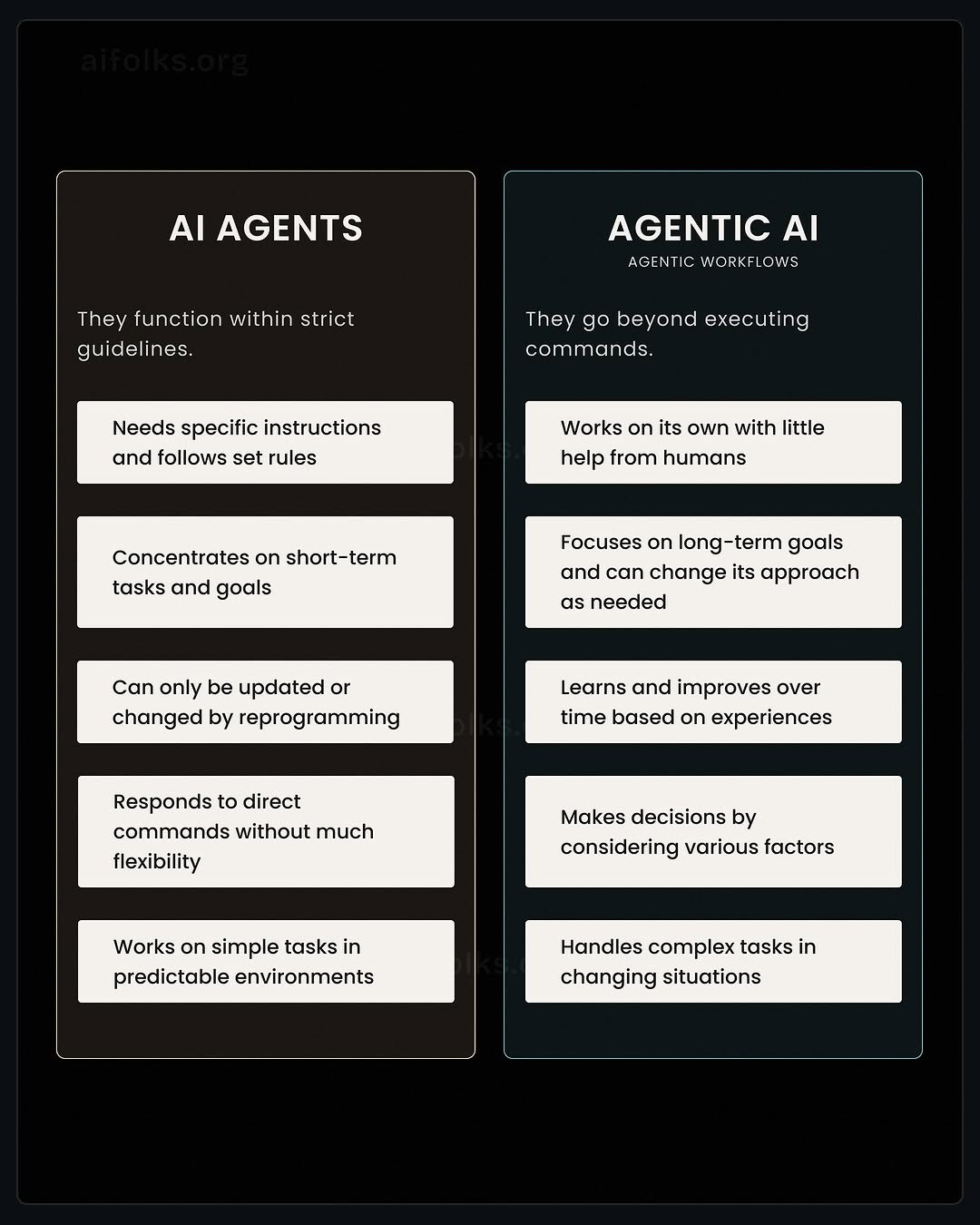
The fundamental change between 2023-era AI and 2026-era AI is autonomy.
Can actually do things in the world — book appointments, send emails, update records, execute transactions
This is why the category "AI agency" emerged as distinct. Building agentic systems requires different expertise than fine-tuning a GPT-3 chatbot did in 2022.
Real Agentic AI Work Happening in Canadian Businesses
What does this actually look like in production? Examples from the kind of work AI agencies build in 2026:
1. Autonomous customer service
An agent handles 70–85% of support inquiries end-to-end: understanding the issue, consulting knowledge bases and customer history, taking action (processing refunds, updating accounts, scheduling services), and escalating to humans only when genuinely needed. Not a scripted chatbot — an actual LLM with access to internal tools.
2. AI voice agents for service businesses
Edmonton dental clinics, law firms, trades, and real estate offices deploy voice agents that handle inbound calls, answer questions, book appointments, and qualify leads. A well-built voice agent in 2026 passes most callers as "talking to a receptionist" for the first 30 seconds of a call.
3. Intelligent document processing
Law firms, accounting offices, insurance brokers process uploaded documents at scale — extracting data, flagging issues, populating systems. What used to take an articling student two hours takes 90 seconds with better accuracy.
4. Research and analysis agents
Market research, competitive analysis, regulatory monitoring, content research — all run continuously by AI agents that deliver summarized, actionable outputs on a schedule or on-demand.
5. Code generation at scale
Development tooling like Claude Code, Cursor, and similar agents produce production code with human engineering review. Edmonton-based software teams ship features 2–4x faster than pre-agentic-AI workflows allowed.
6. Workflow automation
Multi-step business processes — sales outreach, lead qualification, onboarding, billing reconciliation — orchestrated by agents that chain together actions across multiple systems.
Why Edmonton Is a Meaningful Market for AI Agencies
Edmonton's positioning in the AI economy is distinctive:
Amii (Alberta Machine Intelligence Institute) — one of three national AI research centres, producing research talent and open collaboration with industry
University of Alberta — deep reinforcement learning and machine learning programs; Richard Sutton's 2025 Turing Award put Edmonton on the global AI map
Google DeepMind Edmonton — the DeepMind office anchors world-class fundamental AI research in the city
Applied AI companies — Jobber, Drivewyze, Nanoprecise, Sky Patrol AI, Scope AR, and others are deploying AI in production
Conservative buyer base — Alberta businesses don't buy hype; they buy outcomes. The AI work that succeeds here is genuinely valuable, not just pitched well
This creates a market where AI agencies have to deliver real results — and where the shops that do, thrive.
The Agency7 Approach
Agency7 operates as an Edmonton-based AI agency serving both Canadian and international clients. Our approach is shaped by the reality of the Canadian market and our engineering-first orientation.
For Canadian businesses (agency7.ca)
Edmonton base, national reach — serving Edmonton, Calgary, Toronto, Vancouver, Montreal, and across Canada
Compliance-first — PIPEDA, Alberta PIPA, Quebec Law 25, HIA, LSAPI-adjacent considerations built into every engagement
Bilingual capability — full English and French support for clients serving Quebec or federally-regulated industries
Canadian data residency where required — for clients with specific data residency needs, we architect around Canadian infrastructure (AWS ca-central-1, ca-west-1; Azure Canada Central; Google Cloud northamerica-northeast)
Local market knowledge — deep familiarity with Alberta payment systems, provincial regulations, and regional business realities
For international clients (agency7.ai)
Current-generation tooling — Anthropic's Claude (including MCP for tool-use), OpenAI's GPT-5, open-source models where appropriate, frameworks like LangGraph, Mastra, and Vercel AI SDK for orchestration
Scalable solutions — from startup proof-of-concepts to enterprise-wide agent deployments
Multi-agent orchestration — when use cases genuinely require it (which is rarer than agentic-AI marketing suggests)
AI automation across CRM, email, scheduling, and operations systems
Integration work connecting AI capabilities to existing business systems
What We Don't Do (and Why)
Part of running an honest AI agency in 2026 is being clear about what we don't promise.
We don't sell "AI transformation" as an abstract concept
Transformation is a word consultants use when they want to bill you without committing to a deliverable. We work on specific capabilities, measurable outcomes, and real systems.
We don't promise quantum-enhanced AI or blockchain-verified AI actions
These are common AI-agency marketing phrases that are either years away from practical business application or solving problems that aren't real. We build with mature, production-ready technology.
We don't deploy untested autonomous systems
Agentic AI that takes actions in the world requires extensive evaluation, safety checks, and human oversight mechanisms. Shops that deploy "autonomous" agents without these structures create serious liability for their clients.
We don't treat AI as a replacement for humans in roles where it's not ready
LLMs hallucinate, miss edge cases, and get things confidently wrong. Using them in roles where mistakes carry serious consequences (medical decisions, legal advice, financial commitments) requires human-in-the-loop architectures, not full autonomy.
Types of AI Agents We Work With
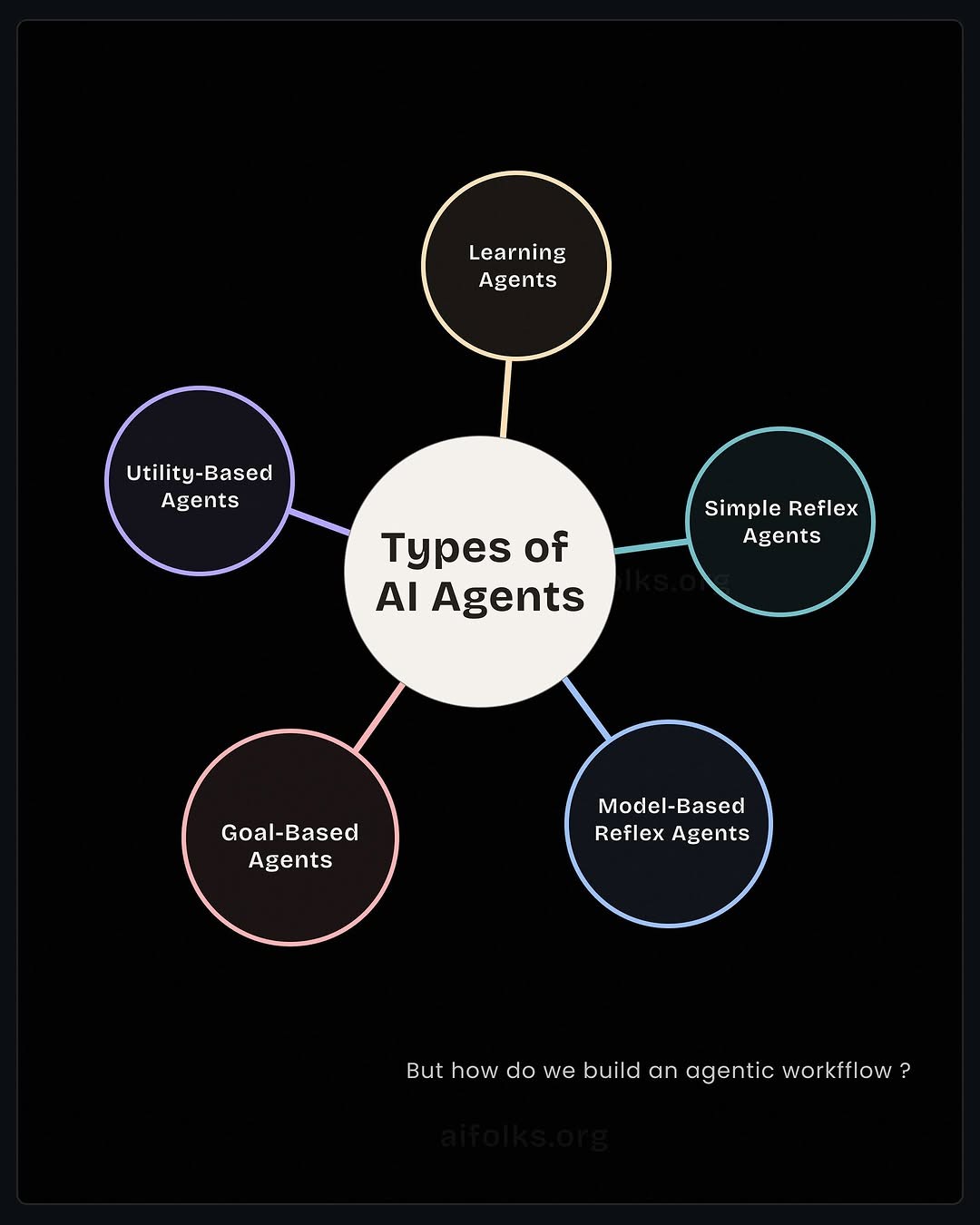
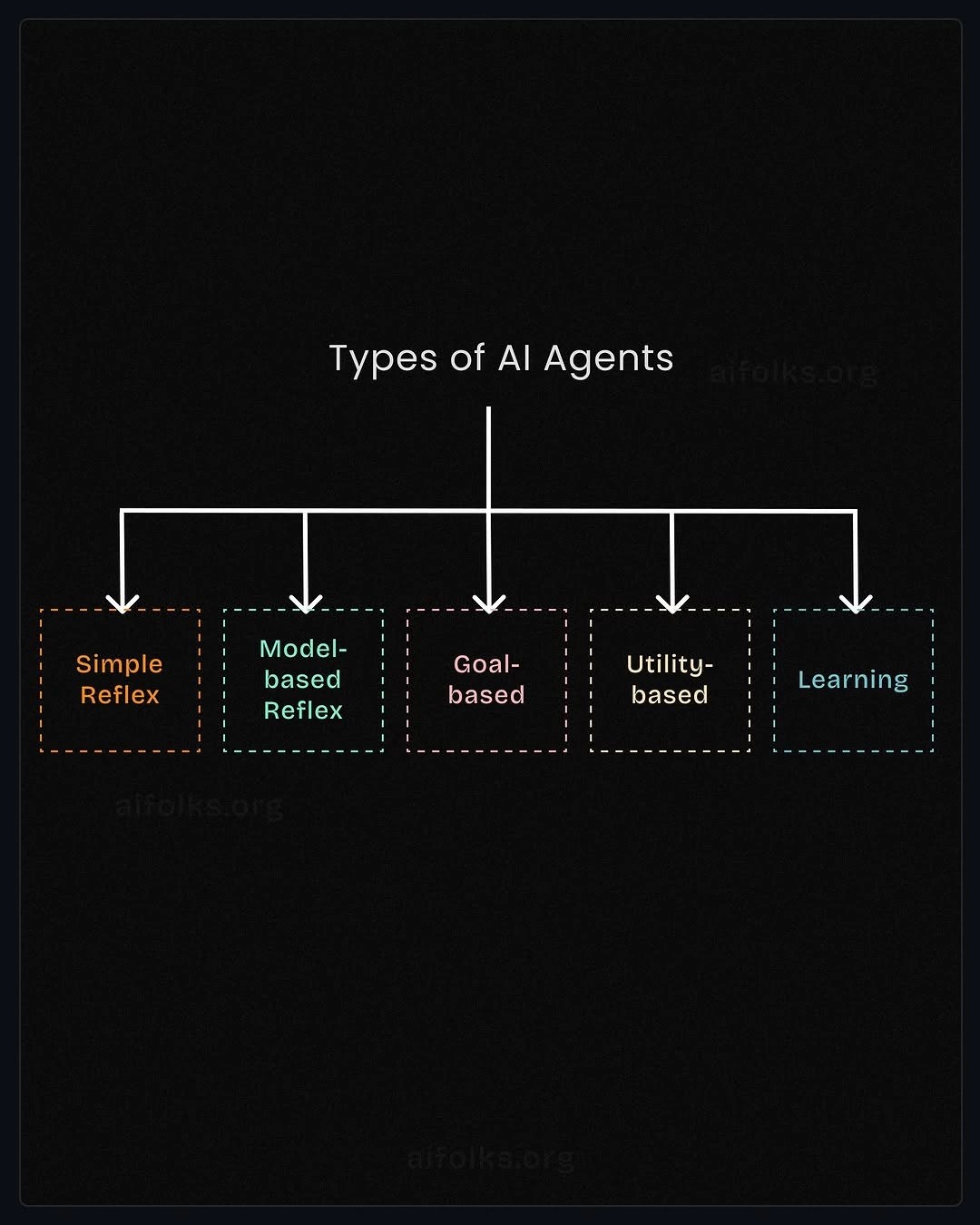
Rather than the textbook taxonomy (simple reflex, model-based, goal-based, utility-based, learning agents), here's how we actually categorize the work in 2026:
Conversational agents — chatbots and voice agents interacting with humans in natural language
Task automation agents — executing specific workflows across tools (send email, update CRM, schedule meeting, file form)
Research and synthesis agents — gathering information from multiple sources and producing summaries or reports
Decision-support agents — presenting options, tradeoffs, and recommendations to humans for final action
Autonomous workflow agents — running multi-step processes end-to-end with human oversight at defined checkpoints
Development agents — generating code, running tests, deploying changes under engineering supervision
Each has different design considerations — error tolerance, human oversight, evaluation metrics, cost profiles — and we scope projects accordingly.
Where AI Agencies Are Going in 2027 and Beyond
Honest predictions for the next 18 months:
More agent specialization, not general-purpose super-agents
The hype cycle around "AGI by 2027" has cooled. What's actually happening is specialized agents getting very good at specific tasks, with better orchestration tooling for chaining them together.
Tighter evaluation and observability
Agencies that can't measure whether their deployed agents are actually working (accuracy, cost, user satisfaction, business outcomes) will lose to agencies that can. Observability tooling (Langfuse, Braintrust, Arize, LangSmith) is becoming table stakes.
Regulatory clarity
Canadian AI regulation (AIDA, when it finally lands) and provincial updates to PIPEDA-aligned laws will create clearer compliance requirements. Agencies with strong compliance posture will benefit.
Commoditization of basic capabilities
Basic chatbots and simple automation are becoming commoditized — tooling makes them cheaper to build. Value shifts toward custom work, domain expertise, and integration complexity.
Human-AI collaboration as the durable model
The "fully autonomous AI replacing humans" framing is fading. The durable pattern is AI handling high-volume tasks with humans doing oversight, judgment, and exceptions. Agencies that build for this model deliver better outcomes.
Frequently Asked Questions
What's the difference between an AI agency and a traditional digital agency?
Traditional digital agencies build websites, run ads, produce content, and manage social media. AI agencies build and deploy intelligent systems — agents, voice AI, automation, AI-integrated products. Some agencies do both; most specialize. In 2026, digital agencies that don't have genuine AI capabilities are increasingly uncompetitive.
How much does hiring an AI agency cost in Canada?
Ranges we see for Edmonton/Canadian work:
Discovery/strategy engagement: $3K–$15K
Single AI agent or voice agent deployment: $5K–$25K
AI-integrated website: $8K–$40K depending on complexity
Custom agent platform for specific business workflows: $25K–$150K+
Enterprise AI deployment across multiple systems: $100K–$500K+
The range is wide because scope varies enormously. Reputable agencies scope and price transparently.
Should I hire an Edmonton AI agency or a bigger firm from Toronto or Vancouver?
Depends on your needs. For most Edmonton businesses, local agencies offer better ongoing relationships, faster iteration, and more accountability. Bigger firms from Toronto or Vancouver charge more, move slower, and often staff Edmonton projects with junior teams. The argument for national firms applies mainly to very large enterprise engagements or industry-specific expertise that doesn't exist locally.
What Canadian compliance requirements affect AI agency work?
The main ones: PIPEDA (federal privacy law), Alberta PIPA (provincial privacy law for Alberta businesses), Quebec Law 25 (if serving Quebec residents), HIA (Alberta health information), sector-specific regulations (LSAPI-adjacent for legal, MFDA/IIROC-adjacent for financial advice, PMRA-adjacent for healthcare). AI agencies working seriously in Canada have clear positions on data residency, consent, retention, and incident response.
Can AI agents really replace entire job functions in 2026?
Rarely. AI agents replace specific tasks within jobs — often reducing headcount requirements for high-volume, repetitive work, but not eliminating roles outright. The honest model is task-level displacement with role restructuring, not wholesale replacement. Agencies that promise "replace your customer service team" are usually oversimplifying.
What's the difference between Agency7.ca and Agency7.ai?
Agency7.ca is the Canadian-focused service brand, emphasizing Edmonton base, Canadian compliance, and regional market knowledge. Agency7.ai is the international platform, offering the same core services to clients outside Canada. Both are operated by the same team — the branding reflects market focus, not different companies.
Is agentic AI going to be controlled by the big platforms (OpenAI, Anthropic, Google) or by independent agencies?
Both, in different roles. Foundation models and core agent frameworks come from the big labs. Custom deployments, domain-specific agents, integration with business-specific tools, and compliance-sensitive applications are built by agencies and in-house teams. The value chain has room for both layers.
What's the right first AI project for an Edmonton business?
Usually something narrow and measurable: an AI chatbot answering common website questions, a voice agent handling after-hours calls, an automation workflow that removes a specific manual task. Broad "AI transformation" projects fail because they lack clear success metrics. Start narrow, ship something real, expand from there.
How do I evaluate whether an AI agency is genuinely technical or just selling branding?
Ask specifically: What tools/frameworks do you use? Show me an agent you've deployed in production. What's your evaluation methodology? How do you handle failure cases and hallucinations? What observability do you put in place? Agencies that answer vaguely or in marketing-speak are probably not doing serious technical work.
Does Agency7 offer training or courses on agentic AI?
Yes — our approach to AI literacy emphasizes practical capability. We offer executive AI briefings, technical team training, and ongoing mentorship for businesses building in-house AI capability. This is genuinely useful when internal teams need to take ownership of AI systems over time.
What happens to AI agents when underlying models update?
This is a real operational concern. Model updates from OpenAI, Anthropic, or Google can break agent behaviors. Reputable agencies have version-pinning strategies, regression test suites, and monitoring to catch regressions before they hit production. Agencies that deploy agents on latest-available models without this infrastructure create ongoing risk.
How does Agency7 compare to other Edmonton AI agencies?
We cover the broader Edmonton AI agency landscape in our honest comparison post. The short version: we're Edmonton-based, engineering-first, transparent about pricing, and focused on shipping working systems rather than selling abstract transformation.
Can you tell me more about real projects Agency7 has shipped?
We've built and deployed: AI voice agents for clinics and trades, AI-integrated websites with LLM-powered features, custom automation workflows across CRM and scheduling systems, research and content agents, and web infrastructure for Edmonton applied-AI companies (including work with Sky Patrol AI). Contact us to discuss relevant case studies for your industry.
The Honest Take on Agentic AI in 2026
The agentic AI revolution is real, but the revolution part is slower than the marketing suggested. What's actually happening:
AI agents are genuinely useful for specific, well-scoped business problems
They're not replacing human judgment in complex, high-stakes work — and won't soon
The value comes from thoughtful integration into real workflows, not from "deploying AI"
The agencies that succeed are the ones with engineering depth, product judgment, and honest client relationships
The gap between shops doing real AI work and shops claiming to is widening, and Canadian buyers are increasingly able to tell the difference
For Edmonton businesses evaluating AI for their operations, the path forward is clear: start with a narrow, measurable problem, work with an agency that can actually build (not just pitch), expect specific outcomes rather than abstract transformation, and iterate from working systems.
Agency7.ca serves Canadian businesses from our Edmonton base. Agency7.ai serves international clients worldwide. Same team, different market focus. If you're considering an AI initiative and want to talk with someone who will give you straight answers about what's possible, what's worth doing, and what it'll actually cost, get in touch.